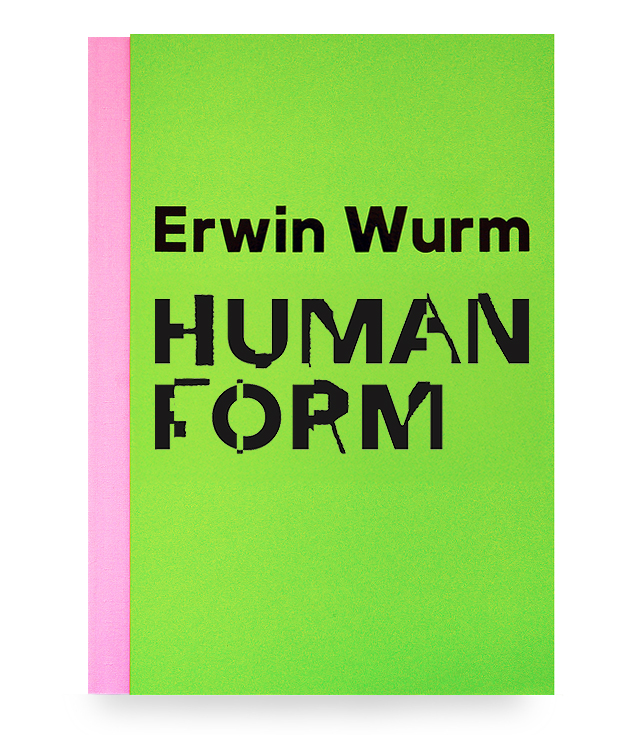
エルヴィン・ヴルム『人のかたち』
Erwin Wurm: Human Form  発行:赤々舎 Size:H257mm x W182mm Page:128 pages Binding:Hardcover Published in September 2025 ISBN:978-4-86541-212-3 |
¥ 3,500+tax
国内送料無料! お支払い方法は、PayPal、PayPay、Paidy 銀行振込、郵便振替、クレジットカード支払いよりお選び頂けます。 |
|---|
About Book
人の身体を起点に、時間、量塊と表面、具象と抽象を巡る
Human Form
Erwin Wurm
One of Austria's most significant artists, Wurm has explored the defining characteristics of sculpture and expanded its fixed concepts by working not only with traditional sculptural materials such as plaster and metal, but also with a wide range of media including photography, clothing, and painting.
Taking the human body--the most fundamental and primal motif of sculpture--as its point of departure, this book introduces Wurm's works through themes such as time, mass and surface, and the relationship between representation and abstraction.
The contours of the "human form," shaped and influenced by everyday objects such as clothing and furniture, by the symbolic meanings of language, and by social ideologies, are fragile and mutable, containing within them the potential for constant transformation and freedom.
Wurm's major works 'Fat House' and 'Fat Car' have been permanently installed in Art Square, adjacent to Towada Art Center, which opened in 2010. The bloated house and car were inspired by the changes in the size of humans as the result of weight loss or gain and its similarity to the production process of sculpture in which the shape of the work alters with the addition of clay or plaster. According to Wurm, "we live our lives in a sculptural way every day." Our bodies constantly undergo change-- our weight increases as the result of eating and consumption, or [decreasing] by burning calories. Wurm also views the house, the car and furniture as an extension of the human body, adopting these as motifs in his work. These objects, perceived as real estate or assets, can also be considered as symbols of power, wealth and greed in a capitalist economy.
These works of art are distortions of these and can arguably be interpreted as ridiculing early consumerism typified by home or car ownership. Upon further investigation, it is apparent that there is also a connection between whether an interpretation of the form (body shape) of these works can be seen as interesting or amusing, and a challenging of perspectives such as "the norm" and "the ordinary" which have been etched in our minds. Through these works, Wurm questions through multiple lenses the notion of "what ought to be" that is accepted as the standard.
The work 'School' is based on an actual school in Austria. The shape is narrow and distorted form conveys a sense of claustrophobia.There are two rooms which can be assumed to be a classroom and the principal's room. From the desks, chairs and blackboards through to the clocks and lamps on display, all of these have been carefully distorted to achieve the same ratio as that of the building. Inside the room are displayed old teaching materials and propaganda posters. In contrast to the compact, bright and cute exterior of the school, the records on display inside will clearly be perceived as outdated and strange. According to Wurm, "knowledge ages," and in this work there is an overlapping of the physical sensation of confinement when entering the school building with the abstraction of the oppressive authority of the education system.
Through a wide range of approaches to the "human form"--the traditional and foundational subject of sculpture--Wurm has employed diverse materials and techniques to shape the surfaces of his works, skilfully etching into the viewer's perception one of sculpture's defining characteristics: its ability to create an illusion of mass.
The concepts often referred to by Wurm--mass and volume, skin and surface, weight and time, abstraction and representation--spill beyond the frameworks of genres such as three-dimensional sculpture and installation, expanding into a broader field of sculptural thought.
"I started to explore the notion of sculpture in relation to social issues. Can a sculpture transform social ideas ? Can a sculpture be embarrassing, for example? The idea was to treat sculpture as a tool and a medium for discussing our world from a different angle. I have been engaged in the expansion of the concept of sculpture for a long time." ──Erwin Wurm
Related Exhibiton
|
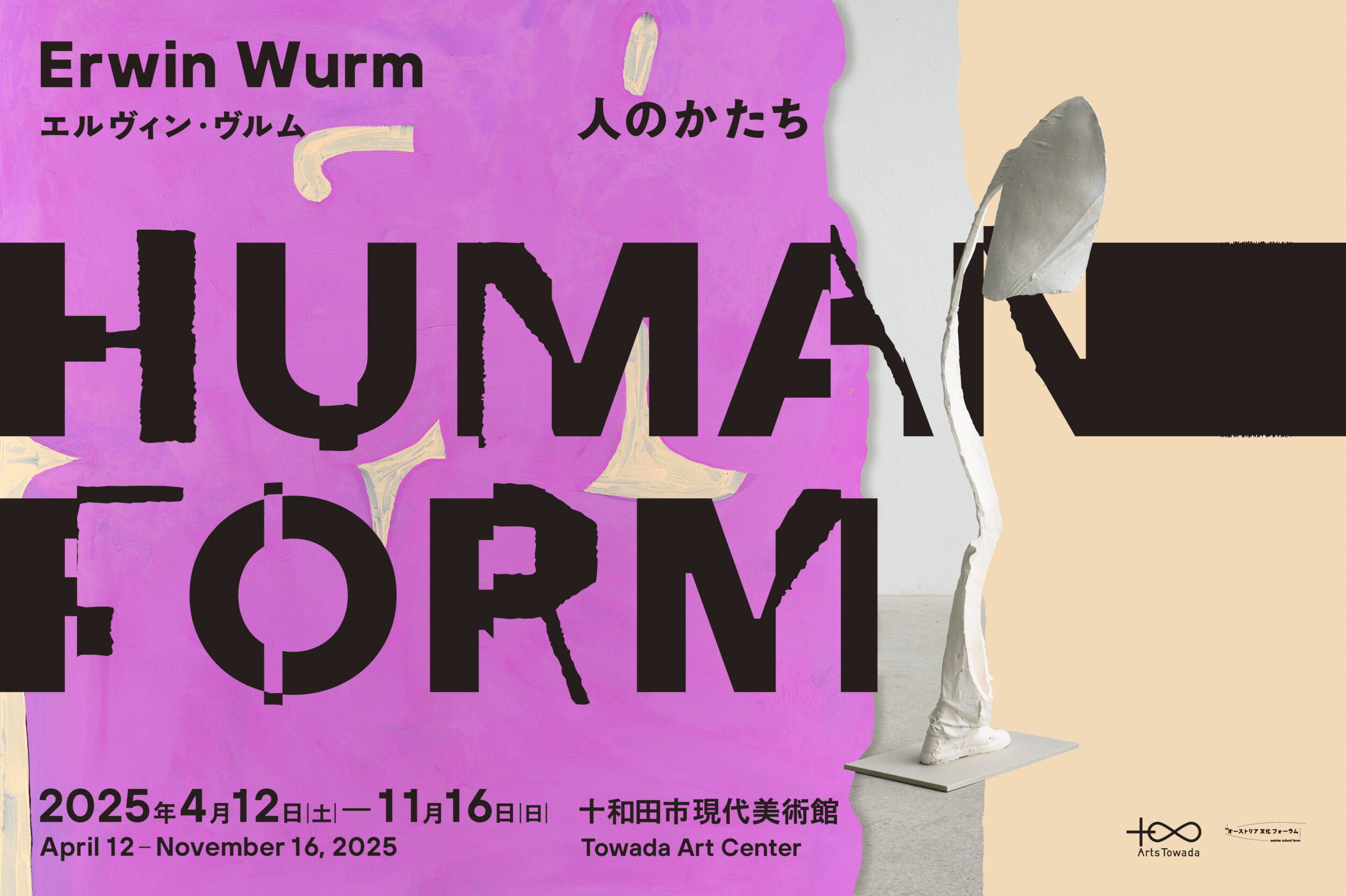
エルヴィン・ヴルム:人のかたち 会期:2025年4月12日(土) 〜11月16日(日) 時間:9:00 〜 17:00(最終入館 16:30) 会場:十和田市現代美術館(青森県十和田市西二番町10-9) 月曜日(祝日の場合はその翌日) ただし4月28日、5月6日、8月4日、8月12日は開館 |
|
Artist Information
エルヴィン・ヴルム
1954年オーストリア、ブルック・アン・デア・ムーア生まれ。ウィーンとリンベルクを拠点に活動。ウィーン応用美術大学とウィーン美術アカデミーで学ぶ。ヴルムは彫刻の概念を徹底的に拡張し、時間、量塊と表面、また具象と抽象の関係について問いかける。主な個展に「Deep」(国立マルチャーナ図書館・コッレール博物館、イタリア、2024年)、「Trap of the Truth」(ヨークシャー彫刻公園、イギリス、2023-2024年)、「Erwin Wurm Photographs」(ヨーロッパ写真美術館、フランス、2020年)など。彼の作品は、「第57回ヴェネチア・ビエンナーレ」(イタリア、2017年)のオーストリア館で展示された。ポンピドゥー・センター(フランス・パリ)、ニューヨーク近代美術館(アメリカ・ニューヨーク)、テート・モダン(イギリス・ロンドン)、ペギー・グッゲンハイム・コレクション(イタリア・ヴェネツィア)、龍美術館(中国・上海)、国立国際美術館(大阪)、十和田市現代美術館(青森)、ヴィクトリア国立美術館(オーストラリア・メルボルン)などに作品が収蔵されている。
Erwin Wurm
Born 1954 in Bruck an der Mur, lives and works in Vienna and Limberg, Austria. Studied at the University of Applied Arts and the Academy of Fine Arts, Vienna. Over the course of his career, Erwin Wurm has radically expanded conceptions of sculpture, questioning its notions of time, mass and surface, abstraction and representation. Solo exhibitions include Deep, Museo Correr and Biblioteca Nazionale Marciana (Italy, 2024) Trap of the Truth, Yorkshire Sculpture Park (UK, 2023) Erwin Wurm Photographs, Maison Européenne de la Photographie (France, 2020). His works were presented in the Austrian Pavilion at the 57th Venice Biennale (Italy, 2017).
His works are included in the collections of major institutions such as the Centre Pompidou (Paris, France), The Museum of Modern Art (New York, USA), Tate Modern (London, UK), Peggy Guggenheim Collection (Venice, Italy), Long Museum (Shanghai, China), The National Museum of Art (Osaka, Japan), Towada Art Center (Aomori, Japan) and the National Gallery of Victoria (Melbourne, Australia).
Related Items
|
|
|
|
|
|---|
|
|
|
(Out of Stock)
|
|---|