Books

fromtheflip_cover.jpg

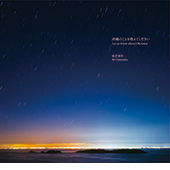
 上田義彦『いつも世界は遠く、
    space01.jpg
  Book Design:葛西薫
  
  発行:赤々舎

  Size: H188mm × W210mm
  Page:768 pages
  Binding:Hardcover
 

  Published in July 2025
  ISBN:978-4-86541-198-0 


¥ 7,000+tax 

国内送料無料!

Out of Stock


About Book


From the Hip ── 上田義彦 40年の軌跡


本書は、上田義彦の代表作から未発表の初期作品、最新作まで、自ら現像とプリントを手がけた約580点を収録し、768ページにわたりその40年の軌跡を現すものです。 

森や家族、河、建物、標本、紙、林檎の木、ポートレート。アートや広告といった枠組にとらわれることなく、上田の一貫して真摯で鋭い眼差しは、世界に存在するさまざまなモチーフを最高の瞬間として捉え、観るものを魅了してきました。
自身を取り巻く世界の機微を敏感に察知し、対象への想いを一瞬のシャッターに込める── 「From the Hip」(英題)が象徴する、直感に裏打ちされ、偶然と必然が交差する瞬間に写し撮られた写真は、遥かな時の流れの中の切り取られた一瞬として、見る者の記憶や感情と響きあってきました。

本書の構成は、通常のレトロスペクティブの趣と異なり、一度シリーズとして発表された代表作品を撮影年順に解きほぐし、さらに上田自身の手で最新作から時系列を逆にたどるかたちで編まれました。それは上田の写真がいつも新鮮に立ち現れ、各シリーズをもう一度遥かな時間へと開いていくことを体現するものです。写真を全方位に開いていくありようのなかで、「いつも世界は遠く、」という響きは、上田の写真の魅力のひとつでもあり、写真に本質的に伴う「距離」を浮かび上がらせます。

約20年間にわたり撮影された、サントリー烏龍茶の広告写真と中国の記録「いつでも夢を」には、上田が風景と向き合うたびに感じたという「遠さ」「遥か感」が漂います。カメラという媒体が持つ特性により、懐かしさと普遍性が加わった唯一無二の写真であり、長年の時間をかけて洗練された、被写体との理想的な距離感と、全体に行き渡る空気感が美しく融合しています。
ポートレート写真もまた、上田の重要な領域です。広告写真としても多く目にする、美しく構成された背景の中に人物が慎重に配された作品から、フレームに収まりきらない接写まで、親密さと緊張感が交錯する「近くて遠い」距離感が現れています。
母・源を意味する「Māter」、被写体の輪郭を溶かすように焦点がぼかされた「M.Ganges」「M.river」、太古の森を歩き、生命の大元と対峙するように写された「Quinault」「Materia」などの作品は、はるか彼方の時間に眠るものを表出しようとする試みでした。
家族の写真から13年間にわたる記録を厳選し、妻の日記の文章が添えられた「At Home」、そして、最初期作品である学生時代の卒業制作── いずれのシリーズにおいても、上田の作品に刻まれたこれらの光の痕跡は、物理的、心理的・時間的「距離」を越えてやって来たものであり、節度や抑制とともに、そこに憧憬、希求を静かに呼び起こします。

また、旅の途上で上田が綴った未公開の日記やメモが初収録されていることも、本書の大きな魅力です。光や影、見ることの歓びについて書かれた言葉の数々は、写真の秘密へと触れようとする思索の断片として、もうひとつの軌跡を形づくっています。

上田は、自作について語るとき「奇跡」という言葉をよく使います。それは、写真という不可思議な営みが、自身の意図や行為だけで完結するものではなく、自分の外側にある要素──おそらく写真そのものが持つ偶然性や一回性、そして「距離」に大きく左右されることを知っているからかもしれません。

『いつも世界は遠く、』は、流れる時間を心から愛し慈しみ、今もなお、その遠さの向こうに世界を愛おしく見つめ続ける、上田義彦の眼差しの「旅」と言えるでしょう。
四十年の写真の軌跡は、私たちの時間と静かに響き合い、世界との出会いをあたらしくひらいてゆきます。


"写真本来の能力は、もともと全方位に開かれているのだと思う。
しかし、それを使う人、撮る人の考え方や目的や意図の力が強く働けば働くほど、その能力は限られた方向にしか開かれないのだと思う。
だから僕は、写真の前でもっともっと自由で野放図に、己の眼を開いて世界を受け入れていければと願っている。"
(p.5  手帳より)


"旅の記憶として鮮明に立ち上がってくるのは、不思議なことだが、
写真に撮れなかったことかもしれない。
写真に残せなかったこと、撮ることができなかったことを、
自動的に、記憶として網膜に焼きつけ頭に残しているのだろう。
旅のほとんどは、遙か彼方にぼんやりとして霞み、しだいに消失してゆく。
どれほど美しい景色だったのか、どれほど過酷だったのか、
自分の記憶を人に充分に伝える事はむずかしい。
しかし写真は、それを見れば、いつでも鮮明にその時間が蘇る。
だから、それを可能にしてくれる不思議な装置、カメラとともに旅をする。"
(p.244より )


寄稿:
「断念と憧憬―上⽥義彦の旅」 清⽔ 穣
「上田義彦の『遠さ』について:遥かの写真を、隔たりの地で観るまえに」 髙嶋雄一郎


From the Hip 

Yoshihiko Ueda


A photograph records a certain person on a certain day, at a certain time, in a certain place.

A few years later, or a few decades, it faithfully conveys to the viewer the moment in which it was taken, exactly as it was. The more casual, the more unplanned the photo, the more vividly it shows the situation at that moment,raw and unvarnished, even with the passing of time.

Why is this? To my mind, photographs have an innate capacity to be open in all directions.

But the more dominant the thought processes of the person using a photograph, or the person who took it, or the power of their purpose or intention, the more likely that capacity will only unfurl in a limited direction.

So when looking at a photo, I try to truly open my eyes and take in the world in a fashion more free, and unfettered. (p.5)


Bizarrely, what I remember most vividly about my travels,

may be the things I never got to photograph.

I suppose the fact that I was unable to leave something in a photo, unable to capture it,

is automatically etched on my eyeballs and in my mind.

Most of my travels fade into the mist of the past, and gradually disappear.

Transmitting one's personal memories adequately to people is difficult.

How beautiful a particular scene was, how harsh.

But the thing about photos is, all you need to do is look, and that moment comes flooding back as if it were yesterday.

Which is why I travel with a miraculous device that enables that very thing: the camera.(p.244)


Yoshihiko Ueda


--------------------------------------------------


In the early summer of 2025, the photographer, Yoshihiko Ueda, will present a retrospective solo exhibition covering the entirety of his photographic journey. The stage for the exhibition is an art museum located somewhat remotely in Hayama between the sea and mountains. The town blessed with an abundant natural setting is, in fact, where the photographer lives and the location that he chooses for portrait photography and filming.

In the process of fine-tuning the content of this solo exhibition, the photographer mentioned several times how much he liked the art museum and the exhibition space. As someone who works at the art museum, this made me feel a little awkward and so I had trouble processing what he said. But after repeatedly looking over the enormous number of his photographs and pondering over his writings, I'm beginning to feel as if his photographic works and his philosophy taught me what is meant by the "distance" of the art museum and the town it is located in. And I can say now, at the risk of sounding somewhat presumptuous, that this art museum is an absolutely suitable venue for taking a retrospective look at the photographer's representative works.


One reason I came to realize this was when the photographer told me he wanted to name the exhibition "Itsumo Sekai ha Tooku, (means "The World is Always Distant," in Japanese)" Initially, it seemed poetic, as if excerpted from a passage in his writings. It seemed to differ in tone from the titles given to the large number of photobooks and exhibitions he had presented in the past. I also sensed a somewhat somber undertone in the word "distance." Now, however, it seems to me that this word is likely pointing to beliefs expressed in his photographs and the true nature of photography that deserve our renewed consideration.


On reflection, photographs are always accompanied by "distance." It is fair to say that it is this distance itself that establish- es photography as a form of expression. Unlike the artist who places paint on the canvas with a brush or the sculptor who carves wood with a chisel, direct physical interaction with the work is not an absolute requirement for artistic expression by the photographer. Distance always exists between the lens and the film, the subject and the camera (the photographer)--it is the structure of this form of expression that cannot be breached. The photograph is the trace that appears left by light that crosses the distance to shine on the photographic film the instant the photographer releases the shutter. [...]

Let me add here that "distance" in this photographer's works serves to create space that arouses emotions of aspiration and longing but also moderation and restraint in us. An example is the sense of being "far away" that he says rose to mind whenever he was confronted with landscapes in China during the twenty years beginning in 1990 when he worked on commercial photography (1990-2011, pp.571 etc) for Suntory oolong tea. Those scenes, perfected in unique photographs that take on a touch of nostalgia and universality made possible by the inherent nature of the camera as a medium, ideal distance in relation to the subject that the photographer refined over time, and the pervading atmosphere all finely integrated are a beautiful example.

The numerous portrait photographs are another remarkable part of the photographer's work. These include a large number of photographs, often seen in his advertising photography, in which persons are carefully positioned within aesthetically refined compositions and backgrounds. But there are also close-up portraits in his photograph collection Por- trait (1999-2002, pp.422-427, 446-451) and photographs of well-known persons taken in his early period (pp.643-656, 666-669, 674-677) in which the face does not entirely fit in the frame. These portraits, rather than conveying intimacy, are permeated with a sense of tension-they are close up and yet far away. [...]

I also recall a different approach to "distance" in addition to what is described above, in the series, Mäter and Study (2021, pp.43-63), in which the focus is blurred as if to dissolve the contour of the subject. The title given to the series means mother or source in Latin and the subjects chosen are such things as the sea, rivers, and the nude human body. It is an exploratory effort that diverges from his earlier works, Quinault (1991, pp.585-596)-photographs of a sacred rainforest in the entirety of its awesomely subtle shades of color and Materia (2011, pp.219-229), both of which also explore the origins of life. Ueda has presented many photographs that are focused throughout the entire image almost to the point of deep focus. However, he says that he chose to photograph this series in shallow focus with the intention of expressing landscapes in memory that sleep far beyond by blurring the reality that meets the eye. What is attempted here is a transcendence of the physical distance from the subject in front of the eye to instead reveal the psychological and temporal distance the farthest limit of what is possible for photographic expression. But the colors and tonal gradation in the photographs are even softer a delicacy that carries on and further develops Pictorialism for the contemporary age is indicative of the photographer's deep interest in the history of photography.

There is one photobook created by Ueda (and his family) that has a sense of distance unlike in any other of his works. At Home (1993-2008, pp.309-313, 370-373, 399-409, 432-441, 505-509) is a collection of photographs carefully selected from among thousands taken of his family over a period of 13 years, assembled with text from his wife's diary woven in. 

This collection is distinct from his other works because these were private photographs that had not previously been made public and also because many were taken not with a large format camera but with 35 mm film cameras such as the Ricoh GRI and a Leica M4 that was a present from his wife. [...]


Ueda often uses the word "miracle" when speaking of his works simply from his awareness that perfection of the expressive medium that is the photograph is not achieved solely by his intentions and actions alone, but is also largely influenced by factors "outside" of himself. The spontaneity and singularity inherent to the photograph itself and perhaps also the "distance" it possesses may account for this in part.  [...]

Yes, "From the Hip," and what follows are more than six hundred photographs chosen with great care for inclusion in the photobook. Or the seaside museum where they are displayed. I sincerely hope that many people will come to enjoy this quiet town within its beautiful natural surroundings together with the landscapes and scenes that photographer Yoshihiko Ueda has gazed on from a distance.


Excerpts from the text "On Yoshihiko Ueda's "Distance": 

Before Viewing Photographs of What is Far Away from Places of Distance" 

 Yuichiroh Takashima(Chief Curator, The Museum of Modern Art, Kamakura & Hayama)


Special gift for the first customers 


小社HP先着ご購入者さまに、直筆サイン入り ポストカード(サイズ:H208mm × W148mm)を、特典としてお付けしてお届け致します。先着300枚限定、無くなり次第終了とさせて頂きます。

(※赤々舎もう一冊、りんご通信など、その他の特典は付きません

One signed postcard will be given away as a Special gifts for the first customers.The offer will end while supplies last.


特典Postcard02.jpg


Related Exhibiton


上田義彦 写真展「いつも世界は遠く、」


会期:2025年7月19日(土)~2025年11月3日(月・祝)

時間:9:30 〜 17:00

会場:神奈川県立近代美術館 葉山

(神奈川県三浦郡葉山町一色2208-1) 


月曜休館(7月21日、8月11日、9月15日、10月13日、11月3日を除く) 


同時開催:上田義彦「FLOWERS」
会期:2025年8月23日(土)~2025年9月6日(土)
小山登美夫ギャラリー六本木


同時開催:上田義彦「Beside Time 光に宿る記憶」
会期:2025年8月21日(木)~2025年9月15日(月祝)
OFS.TOKYO


『いつも世界は遠く、』は各展覧会場にて、特別先行発売中です。(数に限りあり。会場のご購入には、サイン入りポストカートは付きません)


From the Hip_flyer.jpg


Artist Information


上田義彦 


1957年生まれ、兵庫県出身。写真家、多摩美術大学教授。福田匡伸・有田泰而に師事。1982年に写真家として独立。以来、透徹した自身の美学のもと、さまざまな被写体に向き合う。ポートレート、静物、風景、 建築、パフォーマンスなど、カテゴリーを超越した作品は国内外で高い評価を得る。またエディトリアル ワークをきっかけに、広告写真やコマーシャルフィルムなどを数多く手がけ、東京ADC 賞最高賞、ニューヨークADC賞、カンヌグラフィック銀賞はじめ、国内外の様々な賞を受賞。

2011年に自身のスペースGallery 916を主宰。2014年日本写真協会作家賞を受賞。また、初めて監督、脚本、撮影を務め2021年に公開された、映画『椿の庭』は大きな反響を呼び、映画監督としての仕事も注目されている。


作家活動は独立当初から継続し、2023年までに40冊の写真集を刊行。主な写真集に『QUINAULT』(青幻舎、1993年)、『AMAGATSU』(光琳社出版、1995年)、『at Home』(リトル・モア、2006年)、『Materia』(求龍堂、2012年)、『A Life with Camera』(羽鳥書店、2015年)、『FOREST 印象と記憶 1989-2017』(青幻舎、2018年)、『椿の庭』(赤々舎、2020年)、『Māter』(赤々舎、2022年)、『いつでも夢を』(赤々舎、2023年)などがある。

主な個展に「上田義彦『Photographs』」(東京都写真美術館、2003年)、「Chamber of Curiosities」(東京大学総合研究博物館、2006年/国立台湾芸術大学芸術博物館、台北、2011年/リヨン市ガダーニュ美術館、フランス、2011年)、「QUINAULT」(G/P Gallery、東京、2009年/Michael Hoppen Gallery、ロンドン、2010年/TAI modern、サンタフェ、2010年)、「風景の科学 −芸術と科学の融合−」( 国立科学博物館 、東京、2019年)など。

作品はエルメス・インターナショナル(フランス)、ケンパー現代美術館(アメリカ)、ニューメキシコ美術館(アメリカ)、フランス国立図書館(パリ)、Stichting Art & Theatre(オランダ)に所蔵されている。


Yoshihiko Ueda


Born in 1957 in Hyogo Prefecture,  After assisting Masanobu Fukuda and Taiji Arita, he established himself as an independent photographer in 1982. Since then, he has pursued a distinct and unwavering visual aesthetic, engaging with a wide range of subjects across portraiture, still life, landscape, architecture, and performance. His work, which transcends traditional categories, has received critical acclaim both in Japan and internationally.

Ueda's editorial beginnings led to a prolific career in advertising and commercial film, earning him numerous accolades including the Tokyo Art Directors Club Grand Prize, a New York Art Directors Club Award, and a Silver Lion at the Cannes Lions International Festival of Creativity.

In 2011, he founded his own exhibition space, Gallery 916. In 2014, he received the Photographer Award from the Japan Photographic Society. His directorial debut The Garden of Camellias (2021), for which he also wrote the screenplay and handled cinematography, was met with great acclaim and marked a significant expansion of his creative work into cinema.


Ueda has continued his artistic practice without interruption since launching his independent career in the early 1980s. As of 2023, he has published a total of 40 photobooks, including Quinault (Kyoto Shoin International, 1993 / Seigensha, 2003), Amagatsu (Korinsha Press, 1995), at Home (Little More, 2006), Materia (Kyuryudo, 2012), A Life with Camera (Hatori Press, 2015), Forest: Impressions and Memories, 1989-2017 (Seigensha, 2018), A Garden of Camellias (AKAAKA, 2020), Māter (AKAAKA, 2022), and Dream Always (AKAAKA Art Publishing / Jiazazhi, 2023).

Major solo exhibitions include Yoshihiko Ueda: Photographs(Tokyo Photographic Art Museum, 2003); Chamber of Curiosities (University Museum of the University of Tokyo, Tokyo, 2006, the Kuandu Museum of Fine Arts, Taipei, 2011,  Musées Gadagne, Lyon , 2011); Quinault (G/P Gallery, Tokyo , 2009, Michael Hoppen Gallery, London, 2010, TAI Modern, Santa Fe, 2010); The Science of Landscape: The Fusion of Art and Science(National Museum of Nature and Science, Tokyo, 2019); and Dream Always(Gallery on the Hill, Tomio Koyama Gallery, Tokyo 2023).

His works are held in the collections of Hermès International (France), the Kemper Museum of Contemporary Art (USA), the New Mexico Museum of Art (USA), the Bibliothèque nationale de France (Paris), and Stichting Art & Theatre (Netherlands).


Related Items


bk-apple.jpg


pool_cover01s2.jpg

 高木こずえ『pool』
    space01.jpg
  Book Design:刈谷悠三 + 角田奈央 / neucitora

  発行:赤々舎

  Size:
H208mm x W154mm
  Page:112 pages
  Binding:Swiss binding with double-leaf pages

  Published in June 2025
  ISBN:978-4-86541-205
-5
¥ 4,500+tax 

国内送料無料!

【国内/Domestic Shipping】 

お支払い方法は、PayPal、PayPay、Paidy
銀行振込、郵便振替、クレジットカード支払いよりお選び頂けます。

【海外/International Shipping】
Please choose your area from the two below


About Book


青に浮かぶ無時間の風景

月日を超えた、もうひとつの写真のあり方


写真という概念に対して常に新たな問いを投げかけてきた高木こずえ。表現に先んじて技法を選ぶのではなく、その都度、意図に即した手法を探りながら制作を重ねてきた高木が、本作で取り組んだのは、19世紀に発明された古典的写真技法「サイアノタイプ」──いわゆる青写真である。

紫外線に反応する薬品を塗布した紙に像を焼きつけるこの技法は、通常は太陽光で感光させる。高木はそこに独自の操作を加えた。
月光のもと、長時間露光で撮影したイメージをデジタルネガとして出力し、それをサイアノプリントの紙に重ね、改めて太陽光に晒す。夜の光で捉えた像が、昼の光によって定着されるという、時間と光の層を織り込み相対するようなプロセス。ひとつの像のなかに複数の時が共存する。
月と太陽、夜と昼、陰と陽。異なる性質の光が交錯する中で立ち上がるのは、「いま、ここ」の瞬間を超えた、もうひとつの写真のあり方である。


"できあがった写真には、月の光と日の光をあびた青い風景がうかぶ。月光と日光が同時にある。月と日は、月日、つまり時間。月が出て、沈んで、日が出て、沈んで。そのくり返しが時間なのだとしたら、月と日が現れも消えもせずただそこにある写真のなかに、時間はない。時間そのものであり、無時間。時で満ちみちて、時をもたない写真。"(高木こずえ)


対象を記録する装置としての写真ではなく、光の記憶を媒介し、変換の痕跡を引き受ける器としての写真。
わたしたちの見るということが、そこに揺らぎながら浮かび上がる。


pool

Cozue Takagi 


I assumed that the moon in the photograph was the sun. When I found out that it wasn't the sun but the moon, a vague picture of sunlight and moonlight together rose in my mind.

Cyanotype, invented in England in the 19th century, is a classic technique for creating images known for the beautiful blue tones produced. I decided to apply this technique that emerged in the dawn of photography, using the light of the sun to print photographs taken in the light of the moon.

As the full moon approached and nights grew brighter, I would go out to photograph, choosing places that artificial light didn't reach to set up my tripod. On it, I mounted a 6×9 medium format camera loaded with negative film, opened the shutter, and exposed the film to the moonlight for anywhere from a few dozen seconds to a few dozen minutes. Then I developed the film, scanned it, transferred the scanned images to a computer, and printed out inverted images on digital negative film. I placed the film over washi paper coated with cyanotype solution that had been left to dry, then sandwiched the film and washi paper between two glass plates and exposed it to sunlight during the day. The surface of photographic paper exposed to sunlight changes from yellow to green, then blue, gold, and finally a pale pink. When this reaction was complete, I placed the paper in water to develop the image and soaked and rinsed it out several times for half a day to remove any remaining chemicals.

What appears in the finished photographs are blue landscapes and scenes that have been bathed in moonlight and sunlight. Moonlight and sunlight share the same space. The moon and the sun-the two together-create a cycle that is synonymous with time itself. The moon rises and sets, the sun rises and sets. If this repetition constitutes time, then in photographs where the moon and the sun neither appear nor disappear, time does not exist. They are time itself, and yet timeless. They are photographs infused with time but without time.


Related Exhibitons


高木‬ こずえ 個展「pool


会期:2025年5月16日(金)~6月14日(土)

時間:11:00〜19:00

会場:TARO NASU東京都港区六本木6-6-9ピラミデビル4F

日月祝み


poolexhibition.jpg


Artist Information 


高木 こずえ‬ 

1985年 長野県生まれ。東京工芸大学芸術学部写真学科卒。2006年に「insider」でキヤノン写真新世紀グランプリ受賞、森山大道賞受賞。2009年にVOCA展 府中市美術館賞受賞。2010年に第15回信毎選賞受賞、写真集『MID』『GROUND』(共に赤々舎刊)で第35回木村伊兵衛写真賞受賞。2015-2016 公益財団法人ポーラ美術振興財団在外研修員としてアメリカに滞在。2018年より長野県にて制作、活動をしている。

主な個展に、「プラネタリウム」(JINS東京本社、東京 2024)、「プレリュード」(TARO NASU、東京 2019)、「鏡と穴-彫刻と写真の界面」(ギャラリーαM、東京 2017)「琵琶島カレイド/AKAAKAサーカス vol.5」(赤々舎、東京 2013)、「高木こずえ写真展-SUZU-」(諏訪市美術館、長野 2012)、「SUZU」(TARO NASU、東京 2012)、「MID / GROUND」(東京工芸大学・写大ギャラリー  東京 2010)、「第35回木村伊兵衛写真賞受賞作品展 高木こずえ「GROUND」「MID」」 コニカミノルタプラザ ギャラリー、東京 2010)他、多数。

主なグループ展に、「もんぜん千年祭2025」(善光寺、長野 2025 )、「信州の美術いま・むかし 菱田春草から高木こずえまで」(長野県信濃美術館・他、長野 2017)、「諏訪 この土地と人へのまなざし」(諏訪市美術館、長野 2014)、「In between」(taimatz、東京 2014)「木村伊兵衛写真賞35周年記念展」(川崎市市民ミュージアム、神奈川 2010)、「Fragmented Emotions」(Blindspot Gallery、香港 2010)「VOCA展2009 現代美術の展望―新しい平面の作家たち」(上野の森美術館、東京 2009)、「DAEGU PHOTO BIENNALE 2008」(大邱、韓国 2008)、「写真新世紀 2006」(東京都写真美術館、他 2006)他、多数

諏訪市美術館(長野)、
府中市美術館(東京)、川崎市市民ミュージアム(神奈川)、東京工芸大学(東京)、長野県信濃美術館(長野)、amana photo collection(東京)などに作品が収蔵されている。


Cozue Takagi 


Born in 1985 in Nagano, Japan. She graduated from Tokyo Polytechnic University with a B.A. in Photography in 2007. 
In 2006, she won the Grand Prize at the New Cosmos of Photography (Canon), marking her debut with the series insider. Her subsequent recognitions include the Fuchu Art Museum Prize at VOCA 2009, the 15th Shinmai Select Award, and the 35th Kimura Ihei Memorial Photography Award in 2010 for her photobooks MID and GROUND (both published by AKAAKA).
From 2015 to 2016, she participated in an overseas research program in the United States as a grantee of the Pola Art Foundation. Since 2018, she has been based in Nagano, Japan, where she continues her artistic practice.

Her major solo exhibitions include Planetarium (JINS, Tokyo, 2024), Prelude (TARO NASU, Tokyo, 2019), Mirror Behind Hole - Photography into Sculpture (gallery αM, Tokyo, 2017), Biwajima Kaleido / AKAAKA Circus vol.5(AKAAKA, Tokyo, 2013), SUZU (Suwa City Museum of Art, Nagano, 2012), MID / GROUND (SHADAI GALLERY, Tokyo Polytechnic University, Tokyo, 2010), and The 35th Kimura Ihei Memorial Photography Award Exhibition - GROUND / MID (KONICA MINOLTA Plaza Gallery C, Tokyo, 2010), among others.

Her selected group exhibitions include Monzen Millennium Art Festival 2025 (Zenkoji Temple area, Nagano, 2025), From Shunso Hishida to Cozue Takagi: Contemporary and Historical Art in Shinshu (Nagano Prefectural Shinano Art Museum and other venues, Nagano, 2017), Suwa: Perspectives on Place and People (Suwa City Museum of Art, Nagano, 2014), In between (taimatz, Tokyo, 2014), 35 Years of the Kimura Ihei Award (Kawasaki City Museum, Kanagawa, 2010), Fragmented Emotions (Blindspot Gallery, Hong Kong, 2010), VOCA 2009 - The Vision of Contemporary Art (The Ueno Royal Museum, Tokyo, 2009), DAEGU PHOTO BIENNALE 2008 (Daegu, Korea), and New Cosmos of Photography 2006 (Tokyo Metropolitan Museum of Photography, 2006), among many others.

Her works are included in the public collections of Suwa City Museum of Art (Nagano), Fuchu Art Museum (Tokyo), Kawasaki City Museum (Kanagawa), Tokyo Polytechnic University (Tokyo), Nagano Prefectural Shinano Art Museum (Nagano), and amana photo collection (Tokyo), among others.


Related Items


(out of stock)

bk-takagi-mid-02.jpg

(out of stock)

bk-takagi-ground-02.jpg


bk-mirror_c.jpg


bk-雪の刻_c.jpg


bk-AhnJun2_center.jpg


bk-etc_c.jpg

DDR_covver03.jpg

 飯沼珠実『JAPAN IN DER DDR ─東ドイツにみつけた三軒の日本の家 』
    space01.jpg
  Book Design:高室湧人(ca o studio)

  発行:赤々舎

  Size:
H257mm x W182mm
  Page:176 pages
  Binding:Softcover
  bilingual (Japanese and German)

  Published in June 2025
  ISBN:978-4-86541-204
-8
¥ 4,500+tax 

国内送料無料!

【国内/Domestic Shipping】 

お支払い方法は、PayPal、PayPay、Paidy
銀行振込、郵便振替、クレジットカード支払いよりお選び頂けます。

【海外/International Shipping】
Please choose your area from the two below


About Book


「家」の詩学── 人と建築のあいだに宿る記憶と経験

 
東京、ドイツ・ライプツィヒ、フランス・パリの三都市を拠点に、建築、写真、出版を論理的かつ身体的実践として展開してきたアーティスト・飯沼珠実。本書『JAPAN IN DER DDR―東ドイツにみつけた三軒の日本の家』は、彼女が2008年に予期せずたどり着き、2009年から約6年間暮らした旧東ドイツの都市・ライプツィヒでの体験を起点に生まれた写真と文章によるプロジェクトです。

はじまりは、冷戦下に日本の建設会社が手がけた建築「インターホテル・メルクア、ライプツィヒ(現ウエスティン)」との出会いでした。その特異な歴史に惹かれた飯沼は、当時の関係者への取材を重ねる一方、都市のスナップを撮り歩き、自らと都市との関係を探っていきます。なかでも飯沼が強く関心を寄せたのは、映画や小説にもたびたび登場する「ホテル」という劇場的空間でした。

本書では、「インターホテル・メルクア、ライプツィヒ(現ウエスティン)」、「インターホテル・ベルビュー、ドレスデン」、「グランドホテル、ベルリン」――1970年代後半、旧東独において日本の建設会社により建てられた三軒のホテルにフォーカスしています。所有者が変わりながらも独自の存在感を放ち続けるこれらの建築を対象に、飯沼はリサーチの過程や関係者との対話、街を歩く中で得た感覚を織り交ぜながら、写真と文章を通して空間の記憶と経験を立体的に紡ぎ出していきます。

リサーチ中に出会ったある資料には、「ホテル」が「家」として語られていたという記述がありました。「家」の詩学に関心を持ち続けてきた飯沼にとって、自身がライプツィヒで見出し、暮らした「家」の経験とも響き合うものでした。

一貫して「家」としての建築、すなわち人が作り住まう建築の「経験」としての側面に注目してきた作家が、歴史と個人的経験を横断し、建築を捉えた稀有な視点による写真集です。


日独バイリンガル


JAPAN IN DER DDR

Tamami Iinuma  


Japan in der DDR - Three Japanese Houses Found in East Germany is a project composed of photographs and texts that trace a journey of discovery sparked by Tamami Iinuma's encounter with the still-standing building Interhotel Merkur, Leipzig (now The Westin) in the former East German city of Leipzig, where she unexpectedly arrived in 2008 and lived for approximately six years beginning in 2009.

Shortly after discovering the Merkur, she learned that it was the first European project undertaken by the Japanese company Kajima Corporation. The hotel was one of four large-scale turnkey projects the company carried out in the German Democratic Republic (GDR; in German: Deutsche Demokratische Republik, or DDR) in the late 1970s. The other three projects were the International Trade Center in Berlin, the Interhotel Bellevue in Dresden, and the Grand Hotel in Berlin.

Following these projects, Kajima established a regional headquarters in London, offering comprehensive services--from feasibility studies to actual construction--to Japanese companies expanding into EU countries. Today, the company operates out of offices in Warsaw and Prague and continues to be involved in a wide range of construction projects across Europe.

Among these four buildings, Iinuma chose to focus on the hotels. Her interest stemmed from the theatrical quality of hotels--spaces that often serve as backdrops for films and novels. In addition, while researching materials related to the Merkur, she repeatedly encountered instances where the word "hotel" was used interchangeably with "house." Having long been drawn to the poetics of the "house," she felt an intense pull toward this linguistic and conceptual overlap.


Artist Information 


飯沼珠実

1983年、東京都生まれ。2008年から一年間、ライプツィヒ視覚芸術アカデミーに留学、2013年までライプツィヒに在住(2010年度ポーラ美術振興財団在外研修員)。2018年、東京藝術大学大学院美術研究科博士後期課程修了。現在は東京を拠点に活動。主な個展に、「機械とこころ一白くて小さな建築をめぐり」(ニコンサロン、2023)「JAPAN IN DER DDR-東ドイツにみつけた三軒の日本の家」(ニコンサロン、2020)、「建築の瞬間」(ポーラ美術館アトリウムギャラリー、2018)、「建築の建築」(POST、2016)など。主な企画展に、「Von Ferne.Bilder zur DDR」(ヴィラシュトゥック美術館、ミュンヘン、2019)、「Requiemfor a Faild State」(HALLE 14ライプツィヒ現代アートセンター、ライプツィヒ、2018)など。


Tamami Iinuma


Born in Tokyo in 1983. In 2008, she spent a year studying at the Academy of Fine Arts Leipzig (Hochschule für Grafik und Buchkunst Leipzig), and remained based in Leipzig until 2013. In 2010, she was awarded a fellowship by the Pola Art Foundation for overseas research. She received her Ph.D. from the Graduate School of Fine Arts at Tokyo University of the Arts in 2018. She is currently based in Tokyo.

Her major solo exhibitions include Machine and Heart - On the White, Small Architecture (Nikon Salon, 2023), JAPAN IN DER DDR - Three Japanese Houses Found in East Germany (Nikon Salon, 2020), Momentary Architecture (Pola Museum of Art, Atrium Gallery, 2018), and House of Architecture (POST, 2016).

She has also participated in numerous group exhibitions, including Von Ferne. Bilder zur DDR (Museum Villa Stuck, Munich, 2019) and Requiem for a Failed State (HALLE 14 - Center for Contemporary Art, Leipzig, 2018) .


Related Items


bk-decades_iinumas.jpg


SASUKE_cover03.jpg
    
 深瀬昌久『サスケ』

  Book Design:François Dézafit
  日本語組版:榊原健祐

  発行:赤々舎

  Size: H260mm × W185mm
  Page:192 pages
  Binding:Hardcover

  Published in June 2021
  ISBN
978-4-86541-136-2


¥ 5,000+tax 

国内送料無料!

【国内/Domestic Shipping】 

お支払い方法は、PayPal、PayPay、Paidy
銀行振込、郵便振替、クレジットカード支払いよりお選び頂けます。

【海外/International Shipping】
Please choose your area from the two below


About Book


深瀬昌久の傑作写真集、重版出来!


代表作「鴉」で写真史に爪痕を残しながらも長らく日の目を見ることのなかった数奇な写真家、深瀬昌久。
彼がこの世に残した傑作「サスケ」は2021年6月に写真集としてまとめられたのち、たくさんのご好評を頂き、品切れとなっておりましたが、このたび重版となりました。(2025年6月  第2版)
 

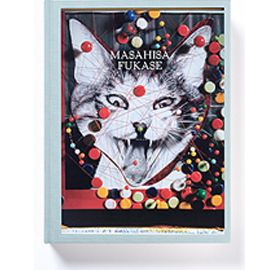
本書は、深瀬の猫写真の主人公サスケと、その妹分モモエの写真を集成した決定版です。
写真のセレクトから編集に至るまで新たに作り上げられ、猫写真というジャンルを超え、深瀬の作品展開の中核を為すものとして「サスケ」を位置づけています。
また、「サスケ」を通して探求した写真表現の数々──主客未分から得られる純粋経験や、視覚と触覚を掛け合わせた知覚──を解き明かします。
巻末に、トモ コスガによるテキスト「愛という名の純粋経験」を所収。
生涯にわたり、猫を身近に愛しつづけた深瀬昌久。その作品世界への重要な視座となる写真集。


「私は猫眼の高さで腹這いになってこの1年余り実によく写真を撮っていたので、なんだか猫になってしまった。自然の移ろうなかで気ままに好きなものと遊びながら写真を撮るのは、幸せな作業だった。私はみめうるわしい可愛い猫でなく、猫の瞳に私を映しながら、その愛しさを撮りたかった。だからこの写真集は、サスケとモモエに姿を借りた私の『自写像』といえるのかもしれない」  
深瀬昌久『猫の麦わら帽子』(文化出版局、1979年)より


「サスケ」刊行にあたって

トモ コスガ


代表作「鴉」で写真史に爪痕を残しながらも長らく日の目を見ることのなかった数奇な写真家、深瀬昌久。彼がこの世に残した傑作「サスケ」が満を持して刊行となります。

物心つく頃から猫と隣り合わせの人生を送った深瀬の写真には、実に数多の猫が登場しました。中でも彼によって最も多く撮られ、今でも彼の猫写真を象徴する1匹として世界中から愛され続けているのが、キジトラ模様のサスケです。

深瀬は70年代後半に「ビバ!サスケ」「サスケ!!愛しき猫よ」「猫の麦わら帽子」と猫を題材にした写真集を3冊も世に送り出しました。その全てがサスケと、次いで飼い始めた三毛猫モモエの2匹を被写体にしたものでしたが、あくまでも当時の日本に到来した空前の猫ブーム需要に応える目的に沿った出版であり、彼の写真表現を前面に押し出した作品集とは言いがたいものでした。そうした背景も相まってか、これまで「サスケ」が人々に癒しを与えるような猫写真のジャンル内で評価されることはあっても、作品として批評される機会に恵まれることはそれほどなかったのです。しかし「サスケ」が、実は深瀬の代表作「鴉」と表裏一体にあり、ひいてはその2作が、彼のもうひとつの代表作「洋子」を陰陽にそれぞれ分けたものだと知った時、その真価は初めて問われると言えるでしょう。

深瀬の妻・洋子との離別がきっかけとなって制作が開始されたのが「鴉」でしたが、12年間に及ぶ彼女との結婚生活について、彼が「しまいには写真を撮るために一緒にいるようなパラドックスが生じ、それは決して幸せなことではなかった」と振り返ったように、70年代中盤には夫婦としての関係に終止符が打たれました。まるで霞がかった井戸の底を覗き込むような、虚無のブラック&ホワイト。それはのちに深瀬の代表作となるだけでなく、現在では日本写真の金字塔として世界的に評価されています。

その前身にあたる「洋子」は、題名が示すように自身の妻を題材とした作品ですが、彼女を写した写真群の合間にカラスを写した写真を印象的に織り交ぜて構成されました。それに続く形で発表された「鴉」においては彼女の姿こそ見当たりませんが、闇を舞うカラスにその残像を見るのはそう難しいことではありません。つまり私たちは「鴉」を通じて、妻の喪失を起因とした深瀬の寂寥を感じ取ることができます。

さて当時、深瀬が「鴉」と並行して向き合う題材がありました。それが「サスケ」です。深瀬は、洋子と別れた直後にもらってきたその仔猫をどこへ行くにも伴っては、のびのびとした姿や奔放に戯れる様子を夢中で撮り続けました。その前年に洋子との離別があったことを踏まえると、やはりサスケの影に彼女の残像を見ずにはいられません。しかしその姿は「鴉」とは対照的に、生ける喜びが全面に溢れ出たもの。言ってみれば、古い歌謡集「梁塵秘抄」に収められた文句「遊びをせんとや生れけむ 戯れせんとや生れけん 遊ぶ子供の声きけば 我が身さえこそゆるがるれ」を連想させるほど、生に突き抜けた表現であることが見て取れます。そのことから「サスケ」を通じて見ることができる戯れとその享楽とは、かつての賑やかな結婚生活の追憶であるとも受け止めることができます。

このように、「鴉」を通じて自らの業を背負いながらも「サスケ」を通じてそれを前向きに受け止めたという意味で、両者は陰陽の表裏一体にあったと捉えることができるのです。

そのような作家背景を抜きにしても、「サスケ」は写真表現を通じた深瀬の試みを教えてくれます。彼が書き残した言葉の数々を辿りながら2匹の写真をつぶさに視ることで浮かび上がるのは、言葉が通じない動物を相手にするからこそ働かせる身体的な触覚の発動、あるいは被写体に自らを重ねる感覚としての主客未分の境地であり、それらこそ深瀬が一生涯をかけて撮った写真を貫く特有の感覚だったとも言えるでしょう。ですからやはり、「サスケ」なくして深瀬の写真を語り尽くすことはできないと言っても過言ではございません。

今回、「サスケ」を再びこの世に送り出すに当たって、彼の視座は従来の3冊を単に復刻することでは確かめることが難しいと判断し、写真の選出から編集に至るまで、いちから作り上げました。その際には、深瀬が70年代当時に自ら焼いたビンテージ銀塩プリントからの選出と図版作成をし、サスケにまつわる彼の手記を頼りにしながら、深瀬がサスケを通じて試みたに違いない表現の数々が見て取れる写真を余すことなく詰め込みました。

本書をもって、「サスケ」が「鴉」や「洋子」と併せて後世に引き継がれ、また写真史に刻まれることを心から願います。


トモ コスガ
深瀬昌久アーカイブス 創設者兼ディレクター/ 本書編集者


SASUKE 

Masahisa Fukase


This publication 《SASUKE》is dedicated to Masahisa Fukase's emblematic series on his two cats: Sasuke and Momoe, combining unpublished and iconic images.

World famous Japanese photographer, notably known for his cult book The Solitude of Ravens (1986), Masahisa Fukase turns in 1977 his lens towards his new companion: his cat Sasuke. Surrounded by felines since his childhood, Fukase decides with the arrival of this new kitten to make him a photographic subject in his own right. He takes it everywhere with him and, in a long-term almost experimental form, explores a new practice: "That year I took a lot of pictures crawling on my stomach to be at eye level of a cat and, in a way, that made me a cat. It was a job full of joy, taking these photos playing with what I liked, in accordance with the changes of nature." Taking advantage of this model full of life, Fukase created as usual an extraordinary photograph in its technical and visual inventiveness. 

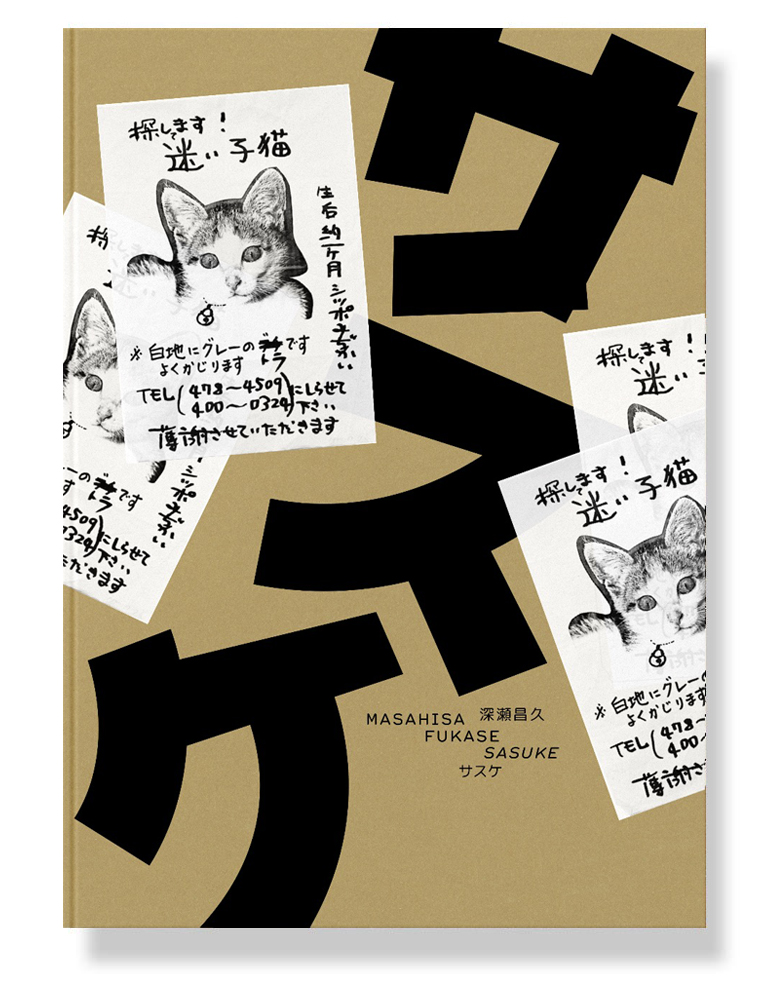
One day, Sasuke disappears and the Fukase sticks hundreds of small posters (as featured on the cover of the book) in his neighborhood. After that, he welcomes a second cat, nicknamed Momoe, who will also enter the frame: "I didn't want to photograph the most beautiful cats in the world but rather capture their charm in my lens, while reflecting me in their pupils. You could rightly say that this collection is actually a «self-portrait» for which I took the form of Sasuke and Momoe." The book is divided in 4 chapters, organizing the chronology of Fukase's life with his cats and, as often in his work, showing a form of projection of the photographer into his subject. The cat, a faithful companion who never leaves him, takes the place of his wife, eternal heartache, also represented by the iconic fleeing crows. 

His cats have been the subject of several books in his lifetime and Tomo Kosuga has dug into the photographer's archives to conceive this ultimate book as the achievement of a series of publications devoted to his cats.

This book closes the series of publications devoted to his cats.


Artist Information 


深瀬昌久 (Masahisa Fukase)

1934年、北海道中川郡美深町に生まれる。日本大学芸術学部写真学科卒業。日本デザインセンターや河出書房新社などの勤務を経て、1968年に独立。1974年、アメリカ・MoMAで開催された歴史的な日本写真の展覧会「New Japanese Photography」への出展を皮切りに、これまで世界各国の展覧会に出展多数。1992年、不慮の事故で脳障害を負い、20年間の闘病の末、2012年没。享年78。代表作「鴉」は日本写真の金字塔として世界的に高い評価を得ている。没後に創設された深瀬昌久アーカイブスの働きにより、2017年には仏・アルル国際写真祭にて没後初の大回顧展「l'incurable égoïste」を開催。2018年、京都のKYOTOGRAPHIE にて国内初の回顧展「遊戯」を開催。また同年、蘭・Foamにて美術館初となる回顧展「Private Scenes」を開催。その開催に合わせて、深瀬がその生涯をかけて制作した作品群を編さんした写真集「Masahisa Fukase」(赤々舎より日本語版、Editions Xavier Barralより英語版及び仏語版)が刊行された。

2025年、深瀬昌久の生涯を映画化した「レイブンズ」(主演:浅野忠信、瀧内公美)が劇場公開され、写真集『洋子』『遊戯』が約50年ぶりに復刊された


トモ コスガ (Tomo Kosuga)

1983年、東京都新宿区生まれ。深瀬昌久アーカイブス 創設者兼ディレクター。2000年頃より深瀬の作品研究を開始。深瀬の没後、遺族からの依頼を受け、2014年に深瀬昌久アーカイブスを創設。アーカイブ活動に留まることなく、深瀬の展覧会キュレーションや出版物の編集や解説執筆を担う。アート・プロデューサーとしても各種展覧会の企画やプロデュースを手がけ、また写真表現を専門としたライターとして日本写真の現在を各種媒体に寄稿。これまでキュレーションまたは共同キュレーションに携わった展覧会として、深瀬昌久「Private Scenes」(2018年 蘭・Foam)、深瀬昌久「l'incurable égoïste」(2017年 仏・アルル国際写真祭)、深瀬昌久「救いようのないエゴイスト」(2015年 東京・Diesel Art Gallery)のほか多数。著書として「Masahisa Fukase」(赤々舎より日本語版、Editions Xavier Barralより英語版及び仏語版)がある。写真表現を考えるYouTubeチャンネル「トモコスガ言葉なき対話」にて日々発信中。www.youtube.com/tomokaflex


Mothers_Covers01s5.jpg

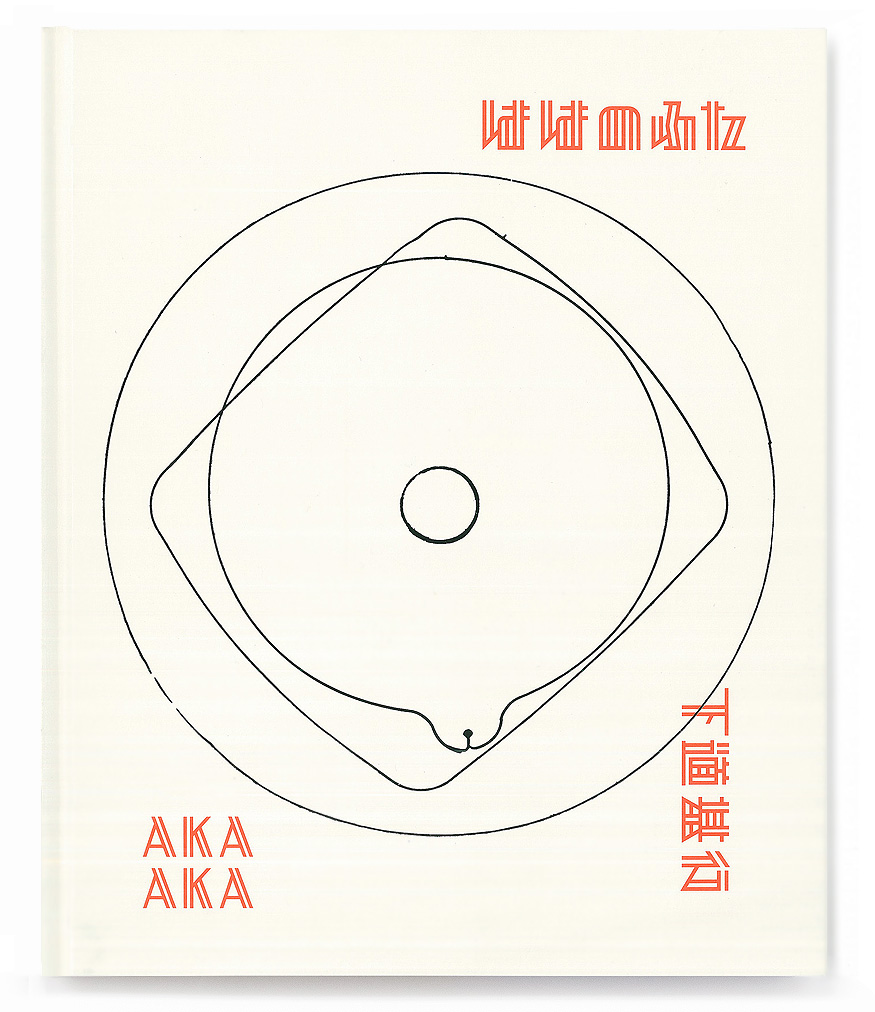
 下道基行『ははのふた』
    space01.jpg
  Book Design:寄藤文平+垣内晴(文平銀座)

  発行:赤々舎

  Size:
H280mm x W228mm
  Page:88 pages
  Binding:Hardcover 

  Published in June 2025
  ISBN:978-4-86541-203
-1
¥ 4,500+tax 

国内送料無料!

【国内/Domestic Shipping】 

お支払い方法は、PayPal、PayPay、Paidy
銀行振込、郵便振替、クレジットカード支払いよりお選び頂けます。

【海外/International Shipping】
Please choose your area from the two below


About Book


日々更新される関係性が形作るもの──

重ねられたふたのかたちに浮かび上がる、日常の創造性


東日本大震災まで東京に住んでいた下道は、結婚を機に妻の実家の愛知に引っ越すことになった。「ははのふた」は、その日常の中で見つけた義母の小さな習慣を撮り溜めたシリーズである。
食卓で見つけた義母の作る"ふた"に興味を持ち、3年間かけて密かに撮影した。また、「ははのふた」の展示発表後、本シリーズは「つまのふた」へとも継続し展開された。

本作は、日々更新される関係性が形作る「新しい家族の風景」をユーモラスに描く写真シリーズである。
それは、3.11により日常の見え方が変わり、家族の食卓に写真をもって入っていく行為でもある。日常の中に点在しているけれど発見されないものを、写真によってあつめる。
そこには、近代を飛び越えて、目の前で起こっている、原初的なクリエイティブなものに目を向ける、接続するリアリティがある。

表紙は、下道がトレースしたふたの形を組み合わせたもの。ふたを象る行為がここにも織り込まれている。


------------------------------------------------


Mother's Covers

Shitamichi Motoyuki 


In 2012, after my marriage, my wife and I moved into her mother's house in Aichi.
It was the first place I called home after moving out of my small Tokyo apartment, where l'd lived for over ten years since starting art school.
The house in Aichi was a beautiful time-worn place, filled with carefully built-in furniture, all designed by my wife's grandfather, an architect.
I began sharing meals with my wife and mother-in-law ── a rare kind of family time I hadn't had since high school. I was becoming part of a new family.
Naturally, there were different customs, little things that puzzled me. Where to find things, where to put them back, what to add to the miso soup...
Each day brought new discoveries, and I felt like a stray cat wandering in and out of the house, or like someone who'd washed ashore on a small, unknown island, starting a new adventure.

In March 2011, the Great East Japan Earthquake struck.The tsunami and the nuclear power plant accident had followed.
I saw how easily the ordinary could vanish, swept away in a moment, and it made me feel fiercely attached to the small, everyday details of life.
Experiencing such a loss gave me more feelings towards the people close to me and to the things around me.
I hope you understand what I mean ── but I do believe things can be born out of losses.
The thing is that people tend to forget quickly, wanting to return to their routines.
It's like leaving from that unknown island to your home ── your comfort zone.
But I wanted to keep hold of that new sensitivity that was already growing within myself as I started over in the time-worn house in a suburb area.

One morning, I noticed an improvised "cover" over a teapot. It was a bit clumsy,
a little awkward, and endearing ── a lovely, everyday tablescape.
From then on, each morning, with my heart beating just a bit faster,
I'd sneak into the kitchen with a camera in my hand.


After finding my motif to take pictures on the morning table,
I kept capturing these small scenes, thinking,
"Primitive people in caves probably made coverings for things too..."
It really felt like glimpsing a preserved, ancient part of ourselves,
and somehow it made me delighted.

This ritual continued for about two years.
Then I had a chance to hold a small solo exhibition with the photos.
I printed them all and showed them to my mother-in-law.
She was puzzled at first, but she gave her permission to show the photos in the exhibition.
This "confession" meant the end of the project as she'd now be self-conscious of her little routines.
Soon, though, the photos found their way to exhibitions in different countries.

Several years later, my wife and I had a daughter.
My wife became a mother, and with that came a new tablescape.
My mother-in-law had begun improvising new covers daily
── no longer mindful of my camera. Then one day, I saw a cover made by my wife.
This was the beginning of "Mother's Covers: Season 2".
And once again, I began capturing these scenes, now with my phone.
A new life created different dynamics, layers and connections
within our family and it also brought me back to the days of photographing the "covers".


Shitamichi Motoyuki


Related Event


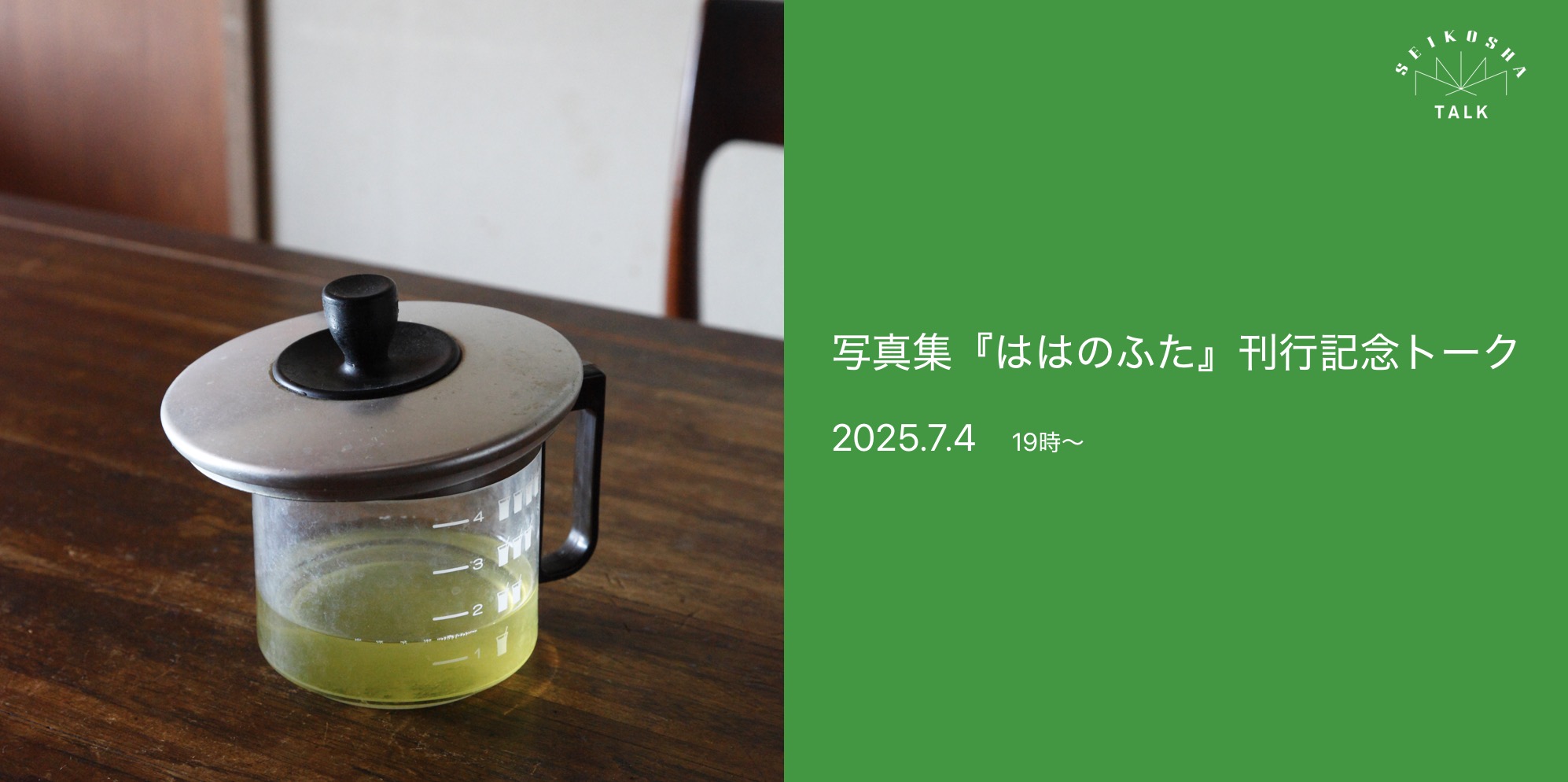
写真集『ははのふた』刊行記念トーク


日時:2025年7月4日(金)19:00〜

会場:誠光社京都市上京区中町通丸太町上ル俵屋町437

定員25名、参加無料(1ドリンクオーダー制)


shitamichi_event.jpg


Artist Information 


下道基行

1978年 岡山生まれ。2001年武蔵野美術大学造形学部油絵科卒業。2003年東京綜合写真専門学校研究科中退。日本各地に残る軍事施設跡を4年間かけて調査・撮影したシリーズ『戦争のかたち』(2001-2005)でデビュー。東アジアの日本植民地時代の遺構として残る鳥居を撮影した代表的なシリーズ『torii』(2006-2012)、250年以上前に沖縄先島諸島の海岸線に津波によって流れ着いた岩の現在を動画で撮影するシリーズ『津波石』(2015-)など、旅やフィールドワークをベースにした制作活動で知られる。2020年以降、コロナ禍で香川県直島に家族で移住し地元の人々と協働しながら島のアーカイブを作るプロジェクト『瀬戸内「」資料館』を継続している。

2012年光州ビエンナーレ新人賞、2015年さがみはら写真新人奨励賞、2019年Tokyo Contemporary Art Awardなどを受賞。2019年ヴェネチアビエンナーレ日本館参加作家。国内外での芸術祭や展覧会参加多数。出版物多数。
ジョージ・イーストマン美術館 (ニューヨーク、アメリカ)、カディスト美術財団 (サンフランシスコ、アメリカ)、高松市美術館、愛知県美術館、豊田市美術館、広島市現代美術館、森美術館、国立国際美術館、岡山県立美術館などに作品がコレクションされている。

2016-2019年に国立民族学博物館特別客員准教授、2024年から現在は京都芸術大学客員教授。香川県直島町在住。


Shitamichi Motoyuki

Born in Okayama in 1978. He graduated from the Painting Course in the College of Art and Design, Musashino Art University in 2001, and left his graduate studies at Tokyo College of Photography in 2003. He debuted with "Senso no Katachi" (Forms of War; 2001-2005), a series that surveyed and photographed the ruins of military facilities around Japan. He is known through works based on his travels and fieldwork, including "torii" (shrine gates; 2006-2012), his representative series on shrine gates still standing in East Asia as relics of Japan's colonial age, and the series, "Tsunami Ishi" (Tsunami Stones; from 2015) that films stones in the present that were washed ashore on the Sakashima Islands in Okinawa by tsunami over 250 years ago.

Notable awards include the Noon Award (Emerging Artist) at the Gwangju Biennale in 2012, the Sagamihara Award for Emerging Photographers in 2015, and the Tokyo Contemporary Art Award in 2019. He was also selected as the exhibiting artist for the Japan Pavilion at the 2019 Venice Biennale. His work has been widely exhibited in Japan and internationally. He has also published numerous publications.

His works are in the collections of the George Eastman Museum (New York, U.S.), Kadist Art Foundation (San Francisco, U.S.), Takamatsu Art Museum (Kagawa, Japan), Aichi Prefectural Museum of Art (Aichi, Japan), Toyota Municipal Museum of Art (Aichi, Japan), Hiroshima City Museum of Contemporary Art (Hiroshima, Japan), Mori Art Museum (Tokyo, Japan), The National Museum of Art, Osaka (Osaka, Japan), and the Okayama Prefectural Museum of Art (Okayama, Japan).

He served as a Special Guest Associate Professor at the National Museum of Ethnology from 2016 to 2019, and has been a Visiting Professor at Kyoto University of the Arts since 2024. He currently lives in Naoshima, Kagawa.


Related Items


bk-T3c.jpg


bk-swiss2024.jpg


bk-kando--2.jpg


<< Previouse 1234567891011